
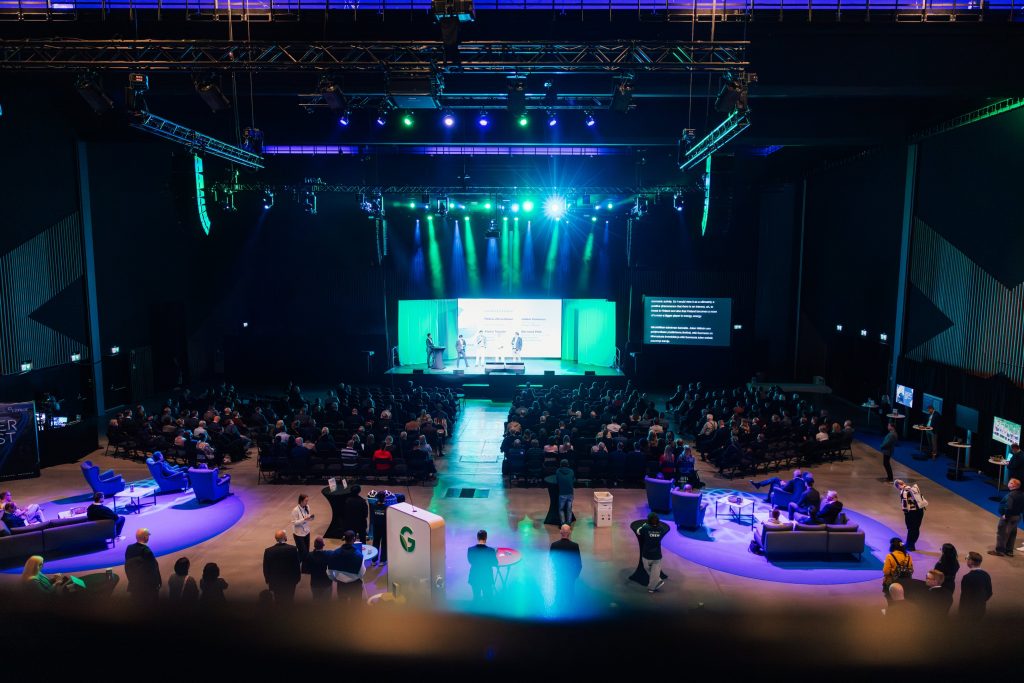
Power Coast Summit gathered more than 600 business leaders in Kotka
In April 2026, the Power Coast Summit business event brought together key players in industry, energy, technology and regional development at the Kotka Harbour Arena. The event focused on the data, battery and energy industries. It also covered other themes from security to education and employment.
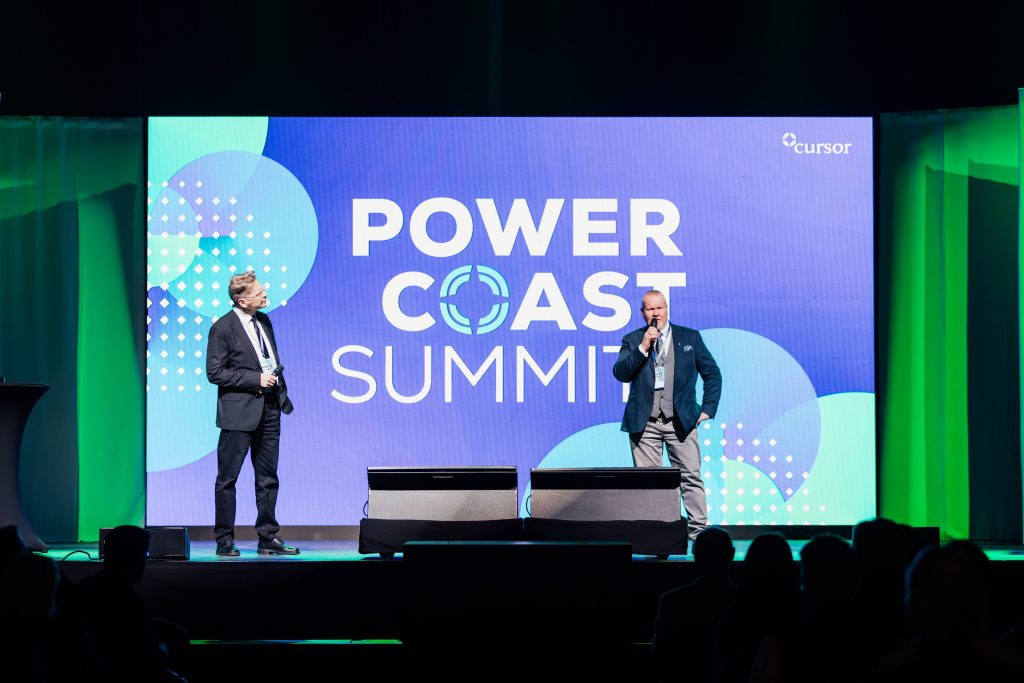
Now organised for the first time, the free two-day event attracted around 600 participants to the Port Arena. Previously, the event was known as the Kymenlaakso Summit. In the opening words of the event, David Lindström, CEO of the organiser, Cursor Oy, described the building blocks of the Power Coast ecosystem: commitment, trust, motivation and cooperation.
– This will create real added value for the region,” Lindström concluded.
The mayors of Kotka and Hamina discussed how the cities can enable the success of Power Coast, for example by providing land. Easpring, the battery industry’s number one, is feverishly building its CAM plant and a respectable number of data centre projects are already underway in Kymenlaakso and Loviisa.
– ” Long-term work has been done in the region and is now bearing fruit,” said Kotka Mayor Esa Sirviö and Hamina Mayor Ilari Soosalu in unison.
The “crown jewel” of the Power Coast area in the eyes of city leaders is Google’s data centre, which is celebrating an anniversary: 15 years since the commercial running of Summa’s servers began.
Help your neighbour!
To mark the occasion, the Power Coast Summit keynote speaker was Utaukwa Allen, Google’s Head of Global Economic Development and Data Centres. Allen said that the Power Coast is not only a regional powerhouse, but also a source of economic growth and innovation for Northern Europe.

According to Allen, Google is proud to be involved in building the Power Coast and the local community.
– At Google, we have a ‘Good Neighbour’ philosophy, where we work with schools and SMEs, for example.
As part of the Good Neighbour ideology, Google will supply the waste heat from the Summa data centre to Hamina Energia’s district heating network free of charge. The waste heat from Summa covers as much as 80% of the heating needs of the local community.
Allen has travelled the world and seen places face big challenges. The Google director recognises that the Kotka-Hamina region has also experienced hardship, but has been impressed by the ability of locals to seize new opportunities:
– There is a clear can-do attitude in this region, which has only strengthened over time. Kotka and Hamina are cities that dare to look at the horizon.
Data centres drive growth
Ongoing data centre projects were also presented. In addition to Google – Summa’s seventh expansion has just been completed – atNorth, Hyperco and Nova Complex spoke about their projects.
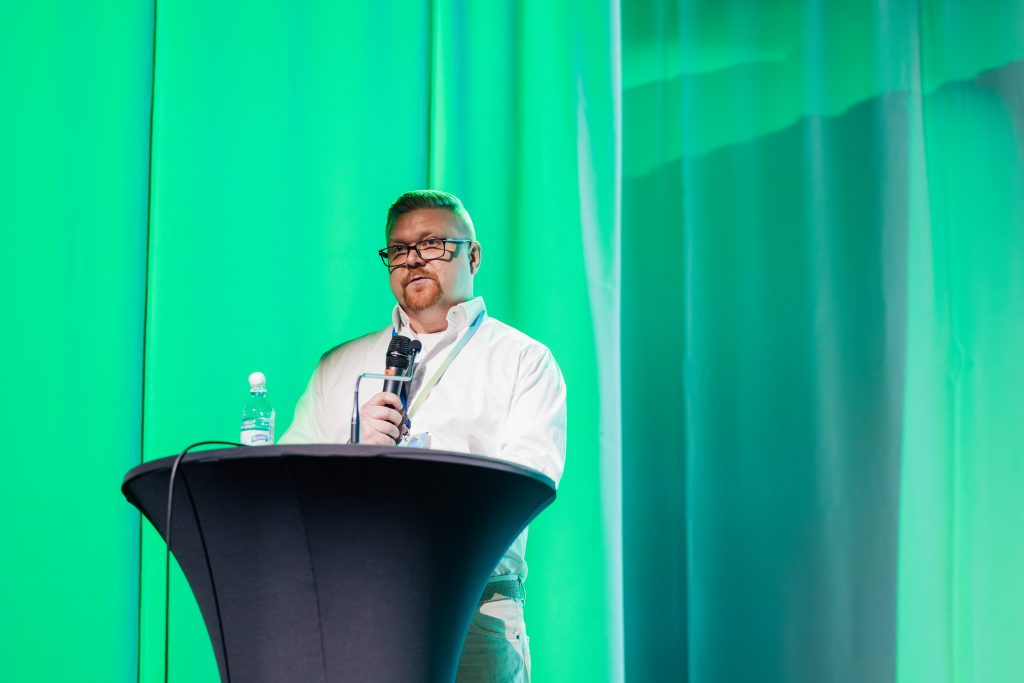
– The data centres in the Power Coast region can form more than just a Finnish data centre hub – they can form a European data centre hub, says Google’s Jukka Vainonen.
Pekka Järveläinen from atNorth said that the economic importance of data centres is not yet fully understood because it is something new.
– Finland cheered when two icebreakers were sold abroad. Our data centre investment is equivalent to ten icebreakers,” Järveläinen said.
Jouni Salonen from Business Finland has also noticed a certain youthful attitude: data centres, for example, employ “little or wrong”. However, Google Summa employs 500 professionals, the same number as its predecessor’s paper mill. Data centre developers were also unanimous: data centres will bring hundreds and hundreds of new jobs to the region.
Salonen’s colleague Markku Kivistö pointed to the big picture, where Finland is the most competitive country in the EU in the green transition.
– Our window of success is open for 2026-2030, Mr Kivistö said, encouraging further investment.
Battery plant to start in 2027
Vesa Koivisto, Director of Easpring Finland, brought an update from the construction site of the CAM factory in Keltakallio.
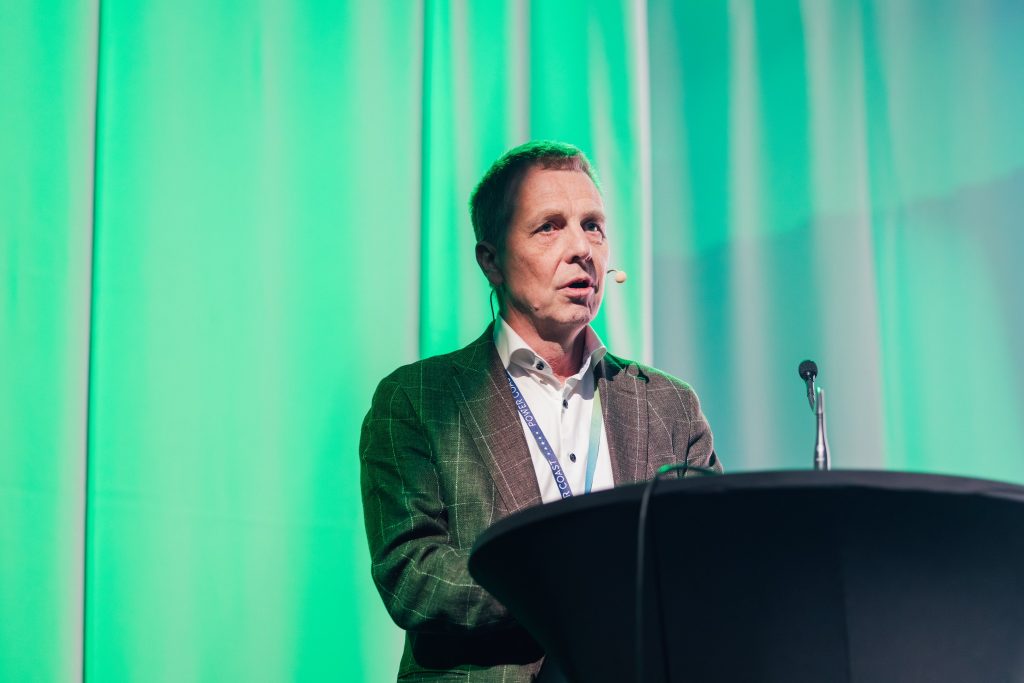
– The main building will house two football pitches and there will be a total of four production lines, Koivisto said. Commercial operations are expected to start next year, producing cathode anode material for 750,000 electric car batteries annually.
Grafintec Oy is planning its own factory next door to Easpring. The factory, which will produce the graphite anode needed for batteries, could be ready in 2029, said Rasmus Blomqvist, CEO.
– The environmental impact assessment will be completed next year and then it will be time to apply for an environmental permit.
Will the grid last?
Perhaps the most surprising part of the second day was a speech by a true security expert: Saana Nilsson, who has had a long career in the ranks of Supo, spoke about investment in a turbulent environment.
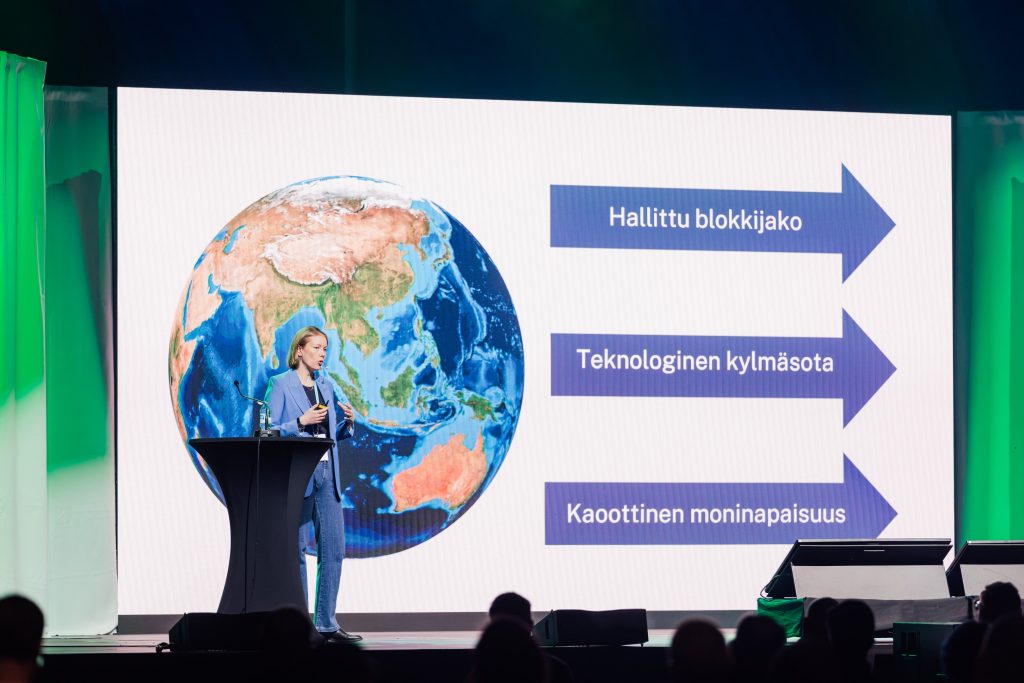
The seminar audience was also interested in electricity and its sufficiency: Urs Pennanen, Director of Fortum, spoke about the challenges of the operating environment for large electricity users, and JussiJyrinsalo, Director of Fingrid, gave a glimpse into the future of the grid.
Text by Sami Anteroinen
Photos by Krista Ylinen